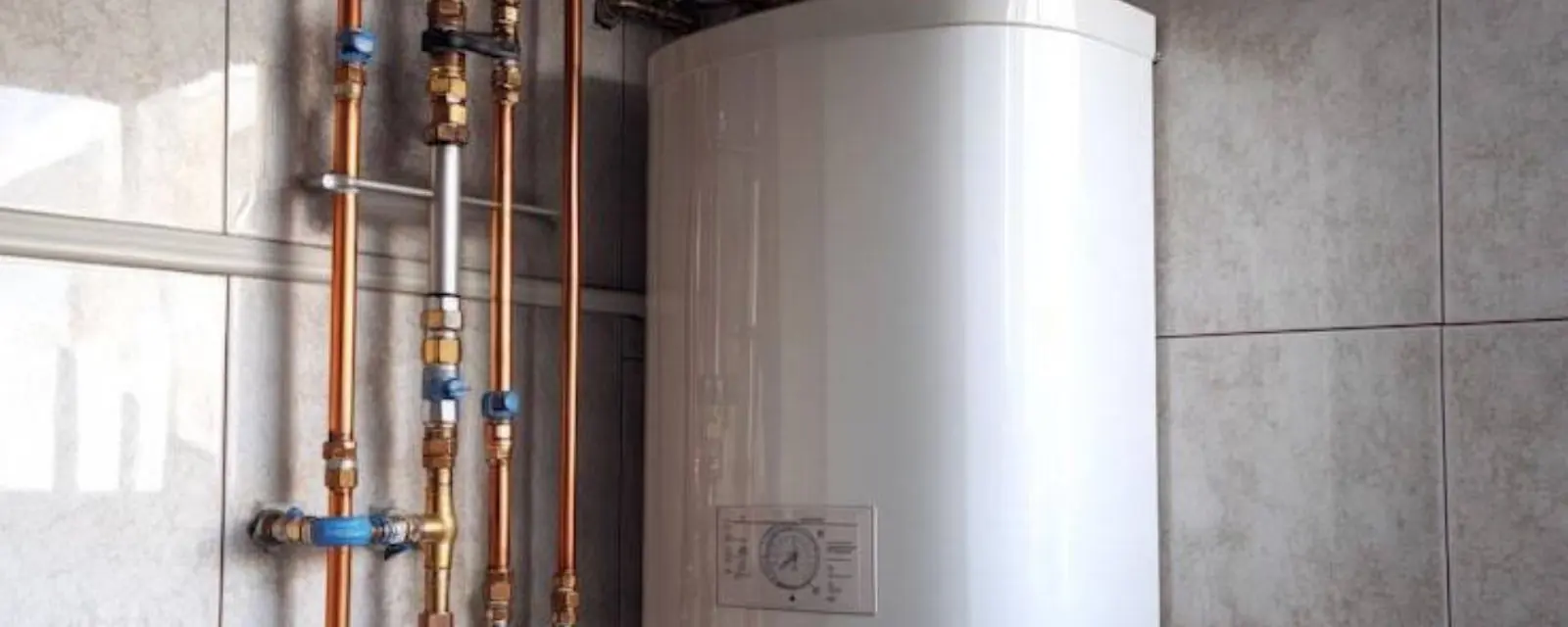
Tank failure or slow drip: two different problems
Water heater leaks come in two forms. A fitting, a drain valve or a temperature and pressure relief valve can drip slowly for a long time. A tank that corrodes through can fail suddenly and release whatever water is inside it, plus the supply behind it until someone closes the valve.
The slow version is easy to ignore, and that is the problem. A damp spot under a tank rarely stays small, because the water has a flat floor to travel across and a wall base to wick into. The sudden version is obvious, but the volume is what makes it costly.
Where the tank sits decides what gets wet
Heaters sit in closets, garages, utility rooms and attics. Where the tank sits determines the damage. A closet unit wets the wall base and flooring in the adjacent hall or bedroom. A garage tank sends water across the slab and into the bottom of walls. An attic tank soaks insulation and loads the ceiling below until it sags.
Tanks above living space deserve a second look. A small leak in an attic can run for a long time before a stain appears on a ceiling.
What the leak is telling you
| What you notice | What it often means |
|---|---|
| Puddle around the base of the tank | Fitting, valve or tank leak, check the source safely |
| Rust streaks on the tank or pan | Slow leak or corrosion, the unit may be near failure |
| Damp baseboard or swollen wall base near a closet | Water has been wicking into the wall |
| Warped flooring next to the heater | Subfloor moisture, often from a long drip |
| Stain on a ceiling under an attic unit | Water is in the insulation and drywall above |
Use this as a rough guide. A plumber identifies the leak source, and our meters show how far the water went.
Tank leaking onto the floor?
Cut the heater off, close its supply and call so the wall base and flooring can be dried.
Water heater safety: the first hour
Hot water can scald, and the leak may be near a power or gas connection. Here is what to do, in order.
- Turn off the electric breaker to the heater or set a gas unit to its off or pilot position.
- Close the cold water supply valve on the pipe above the tank.
- Stay clear of water that came from the tank, which can be very hot, and keep children and pets away.
- If you smell gas, leave the house and call the gas utility or 911 from outside.
- Call a plumber to replace the unit and call us for the water damage.
What the plumber replaces and what we dry
The plumber replaces the heater, valves, pan and drain line. We do not repair or replace plumbing or appliances. Our work is the structure around the unit.
We use moisture meters and a thermal camera to find wet wall base, flooring, subfloor and insulation. Extraction equipment clears standing water first, then air movers and LGR dehumidifiers take over. Soaked baseboards, insulation and drywall are cut out where they cannot be dried. See water mitigation for the drying plan and structural drying for how framing and subfloor are brought back to normal. Questions? Call (817) 623-9267.
A slow leak under the tank becomes subfloor and wall damage
A weeping valve can seem too small to bother with. Over time the moisture goes into the flooring, the wall base and the subfloor beneath. Particleboard and drywall paper soften, trim swells, and the area smells musty. By then it is a drying and repair job, not a plumbing adjustment.
A drain pan with a drain line carries small leaks away, but only if the line is open. If you see rust, damp or stains around the pan, have the unit checked before the leak turns into a full failure.
North Richland Hills notes: permits, house age and the insurance guide
The City of North Richland Hills publishes its Code of Ordinances online and has an online permits and inspections portal. Ask the city building department what applies to a water heater replacement. We do not state which work needs a permit.
According to the NRH history page, the city passed 45,000 residents by 1990, so plenty of houses here are decades old. A heater that has stood in place for years may be past its best.
The TDI home insurance guide puts sudden and accidental water release on its list of covered risks. It also lists a continuous leak as an exclusion. It notes that deductibles can differ by type of coverage. The TDI damage tips tell homeowners to document everything and report early.
Cost of heater leak cleanup and what shapes it
- Whether the leak was sudden or had been running slowly for a long time.
- The rooms and floors reached, and whether water got into the subfloor.
- Wet insulation, especially in an attic.
- Flooring type, since some materials dry in place and others do not.
- Drying days and equipment indicated by the readings.
Expect the scope and price to be laid out before work begins.
Heater leaks and insurance
A tank that fails suddenly may fit the sudden and accidental category in the TDI guide, while a long weeping valve may look like a continuous leak. Your insurer makes that call. Deductibles may differ by coverage type, so read your policy.
Photograph the unit, the pan and the wet areas, and keep the failed parts if your plumber allows. ANSI/IICRC S500 is the published standard used to classify the water.
Mistakes to avoid with a leaking water heater
- Keeping the heater on while it leaks.
- Touching hot water or a wet electrical connection.
- Mopping up and ignoring the wall base and subfloor.
- Leaving a damp closet closed up with the door shut.
Many tank leaks start as a drip, so check around yours and consider appliance leak water damage for other machines in the house. We also serve Hurst and Keller.
Water heater leak questions answered
The line is open 24/7 for water heater emergencies, with a same-day visit if the schedule allows. We do not promise an arrival time, and the dispatcher will give you shut-off steps while you wait.
Cut the power or gas to the heater, then close the cold supply valve. If you smell gas, leave the house and call the gas utility or 911 from outside.
Yes. Water spreads sideways and wicks into wall bases and flooring, and the subfloor underneath can stay wet long after the surface looks fine.
No. A plumber replaces the heater, valves and pan. We dry and clean the structure, which includes wall base, flooring and insulation around the unit.
It depends on your policy and on whether the leak was sudden or continuous. The TDI guide describes both. Ask your insurer before cleanup choices are final.