How storm water damage gets into a home
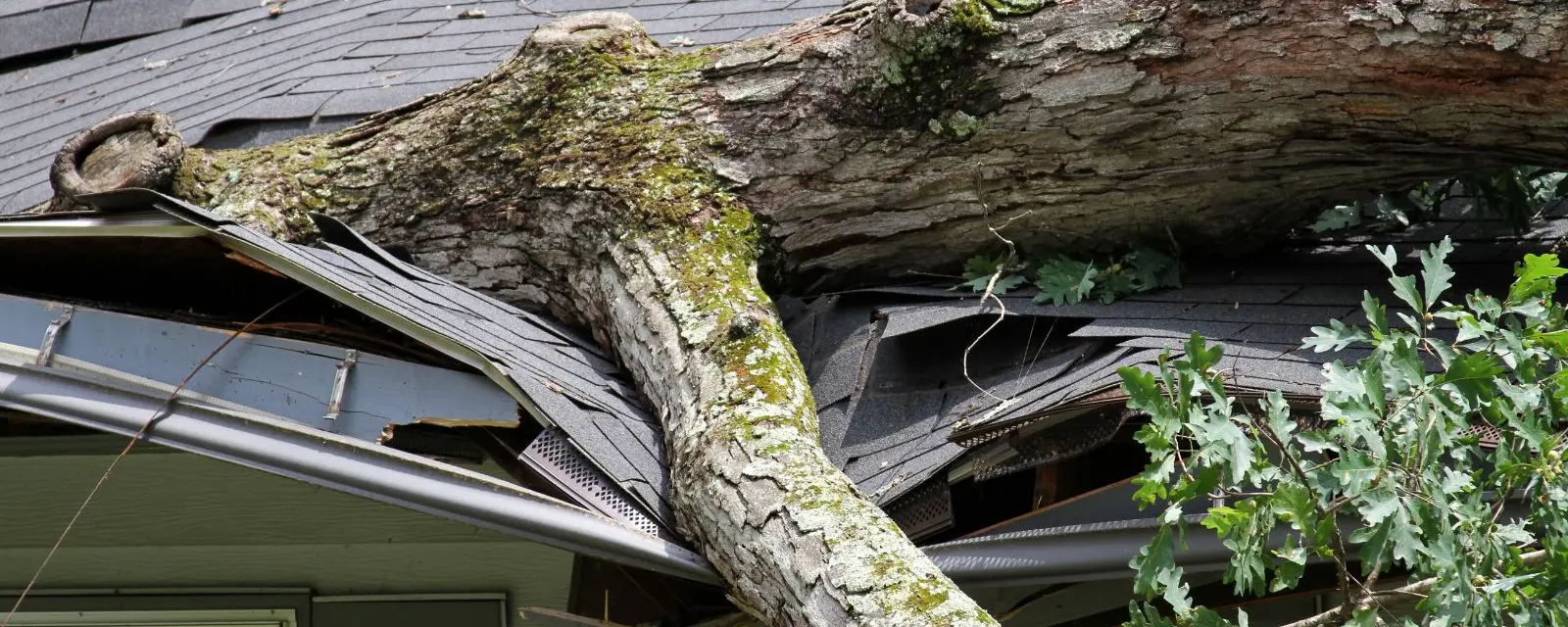
Storm water damage is water that enters a house because weather opened a path for it. Wind-driven rain can push past window frames and door thresholds that stay dry on a calm day. Hail can break window glass. A fallen tree or limb can punch through a roof or wall and leave an opening the size of a doorway.
Drainage plays a part too. Gutters packed with leaves and debris overflow along the wall, and water that cannot leave the yard fast enough can find its way to a door or a low spot in the foundation line. The common thread is that a storm rarely makes just one opening, so the wet areas are often spread through the house.
What you see after a storm and what it means
Start with the obvious signs. A ceiling stain that grows, a wet strip of carpet along an exterior wall, bubbling paint under a window and a damp smell in a closet all point to water that kept moving after the rain stopped.
Look for a pattern. Wet carpet at one window and a stained ceiling in a bedroom down the hall tell you there are at least two paths, and each needs its own check. Water travels along framing and under flooring, so a dry-looking room next to a wet one is not proof it escaped.
- Wet carpet or pad along exterior walls often means wind-driven rain at a window or door.
- Broken glass and soaked curtains point to hail or debris at the window.
- A ceiling stain with a soft or sagging spot means water is sitting in the drywall above you.
- Water pooled at a threshold after heavy rain may have come from the yard side.
First hour safety steps after a storm
Storms often take out power, and that changes the risk. Treat every wet room as unsafe for electrical equipment until the power is confirmed off. Then work through the steps below.
- Stay out of rooms where the ceiling sags or ripples, because wet drywall can fall.
- If water is near outlets, appliances or the panel, leave the power off and do not stand in standing water to reach a switch.
- Keep clear of downed lines or a limb lying across a wire, and call 911 for any immediate danger.
- Move people and pets to a dry room, and lift small items and electronics out of the wet.
- Take photos or video of the damage and the opening first, then start moving things.
- Call (817) 623-9267 so a dispatcher can scope the water, and call a roofer or contractor about the opening.
Water still coming in after the storm?
Call the 24/7 line. Same-day response is offered when available.
Our process: we extract and dry, a roofer or contractor closes the opening
We do not repair roofs, windows or walls. A roofer or contractor handles tarping, boarding up and rebuilding the opening, and we handle the water. Getting the opening covered first matters, because drying a house that is still taking in rain does not work.
On arrival we start with a moisture survey using meters and a thermal camera across every room that may be affected. Extraction units pull standing water from floors, and wet pad and unsalvageable materials are removed. Air movers and LGR dehumidifiers then dry the structure, with readings repeated until the framing reaches its drying goal. Antimicrobial treatment is used where the water source or conditions call for it.
The work follows the published standard ANSI/IICRC S500 as a reference for water damage restoration. For the equipment and monitoring side, see structural drying. For what the first days look like, read water mitigation.
North Richland Hills notes: drainage, rain and nearby hail
The National Weather Service office in Fort Worth wrote up April 2026 storms elsewhere in North Texas, with softball-size hail and an EF3 tornado, and it labels that information preliminary. It does not describe damage in North Richland Hills, so treat it as a regional reminder of what spring storms can do.
The National Weather Service Dallas/Fort Worth normals show 37.01 inches of precipitation in an average year, so heavy rain is a regular part of the local calendar.
The City of North Richland Hills drainage page says the municipal system gathers storm water and sends it to local creeks and channels, with runoff finally reaching the Trinity River. That page also says Public Works will sit down with residents about drainage trouble, and its Administration office is at 817-427-6400.
Neighboring Hurst is a different case. Its own storm water page notes that the City Council set up a storm drainage utility in 2009 to improve drainage and lower flooding hazards, and that is a Hurst program, not a North Richland Hills one. Nearby residents in Hurst and Keller deal with the same storms.
What changes the cost of storm water damage
- How many rooms took water, since storms rarely wet just one.
- Whether the water came through the roof, a window or a wall, and what it soaked on the way.
- How long water sat before extraction began and whether the opening is covered.
- The materials involved, such as carpet and pad, drywall, insulation or flooring.
- How many days of drying equipment and monitoring the structure needs.
A dispatcher goes over scope and price before any work begins. Describe what you see when you call (817) 623-9267 so the visit can be planned.
Storm water damage and insurance: wind versus flood
Coverage for storm damage depends on how the water got in. The Texas Department of Insurance home insurance guide says most home policies do not cover damage caused by floods, and most flood policies have a 30-day waiting period before they take effect. Water that came through a wind-damaged roof or a hail-broken window is a different question from water that rose outside and came in.
TDI flood tips say NFIP flood policies require filing a claim within 60 days. Photos and video taken as soon as it is safe, and damaged items kept until your adjuster has seen them, help any claim. Coverage is never promised here, so read your policy and put the question to your insurer. If outside water rose into the home, see flood damage restoration.
Mistakes to avoid after a storm
- Turning the power back on in a wet room before it has been checked.
- Waiting on drying until the roofer arrives, when the interior can be extracted in the meantime.
- Throwing out damaged items before photos and before your adjuster has seen them.
- Treating one stain as the whole problem and missing the second opening.
- Assuming a roof path is the only source. A roof-only leak is covered on roof leak water damage.
Storm water questions from local homeowners
A dispatcher answers around the clock. When a crew is on hand we respond the same day, though no arrival time is promised. Dial (817) 623-9267 and the dispatcher asks about the water and the opening.
No. A roofer or contractor handles tarping and board-up. We extract the water and dry the structure, so ask your contractor to cover the opening as soon as it is safe.
Treat the area as unsafe for electrical use. Do not stand in water to reach a switch or panel, and keep electronics out of the wet. Tell the dispatcher so equipment planning accounts for power.
Often, yes. TDI says most home policies do not cover flood. Water through a storm-damaged roof or window can fall under a different part of the policy, so ask your insurer how yours treats it.
Water moves along framing and under flooring. A dry surface can sit over wet pad or a wet wall cavity, which is why meters and a thermal camera are used.