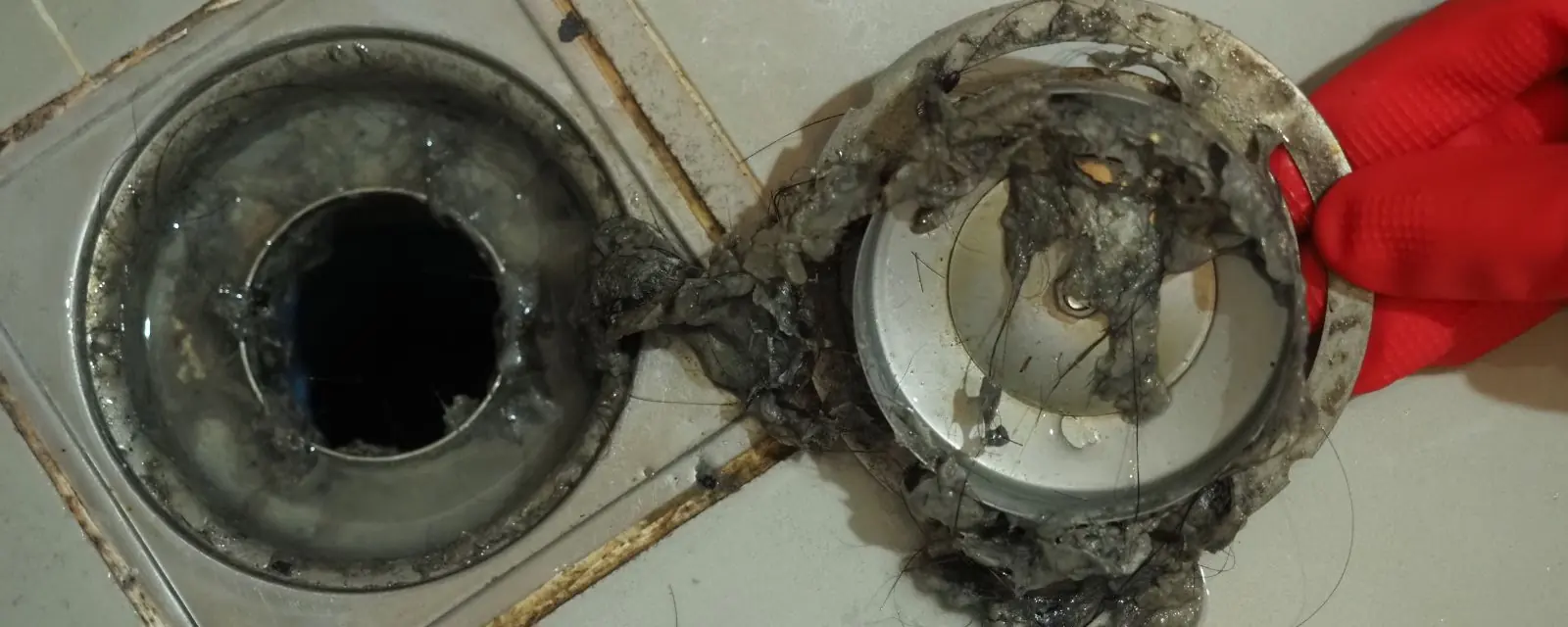
What a sewage backup is and where it shows up first
A sewage backup happens when wastewater cannot leave through the line and comes up through the lowest openings in the house. Floor drains, toilets and tubs are the usual first points. This page covers sewage inside the house. Water that rises from outside belongs on flood damage restoration.
The published ANSI/IICRC S500 standard sorts water into categories, and sewage falls in Category 3, meaning grossly contaminated. That category drives every decision that follows: what stays, what goes and how we protect the crew.
Signs that the problem is the sewer line
- Several fixtures drain slowly or gurgle at the same time.
- Water appears in a tub or shower when you flush or run a washer.
- A floor drain overflows with dark water.
- A strong sewage smell near the lowest drain in the house.
One slow sink usually means a local clog. Several fixtures acting up together points at the main line. A plumber can tell whether the blockage sits on your side or farther along.
Safety in the first hour of a sewage backup
Treat the water as contaminated. Keep out, and keep it contained.
- Keep everyone out of the wet area, including children and pets.
- Do not run water, flush toilets or use the washer or dishwasher.
- Leave the power off if water has reached outlets or appliances.
- Ask Public Works if the blockage is in the city main, using the Utilities Division number, 817-427-6440.
- Call 911 if the situation is a safety risk, because the city page lists no after-hours number.
- Get a plumber to clear the line, then ring (817) 623-9267 for the cleanup.
Sewage on the floor?
Dial the round-the-clock line. Stay out and keep the water off.
How we clean up after sewage
The plumber clears the line. We handle what the water touched. The crew wears protective gear and extracts the standing water with pumps and extraction units, then removes porous materials that absorbed it. Carpet, carpet pad, drywall and insulation are usually taken out and bagged.
Non-porous surfaces such as tile, concrete and sealed trim are cleaned and disinfected. Drying equipment then runs on the structure, and moisture meters tell us when it can stop. Odor control follows once the source materials are gone.
Photos of the affected rooms and removed materials are part of the job, because your insurer may ask for them.
North Richland Hills notes: the city sewer system and who answers
The City of North Richland Hills Utility Operations page lists 292 miles of sewer lines, 5,188 manholes and 2 mechanical lift stations, with wastewater questions routed to 817-427-6440. If the blockage is on the city side, the city is the one to ask.
Next door, Haltom City Public Works reports that its sewer division cleans over 500,000 feet of sanitary sewer main yearly. That figure shows how much routine line work municipal crews do.
Texas insurance regulators, in the TDI guide to home coverage, call backup of sewers or drains an optional endorsement. The city floodplain FAQ notes that its maps address creek and channel flooding only, so a floodplain map says nothing about a sewer backup.
What affects the cost of sewage cleanup
- The area the water reached and how deep it stood.
- How much carpet, pad, drywall and insulation must be removed.
- Whether the water sat for hours or for days.
- Protective gear, disposal and cleaning steps for the category.
- Drying days and the rebuild afterward.
A crew explains the scope and the price once it has seen the rooms. Reach dispatch at (817) 623-9267.
Insurance and a sewer backup
The state insurance department guide describes sewer or drain backup as an optional endorsement and not standard coverage. Check yours for that wording. Flood coverage is a separate question.
Take photos before anything is removed and keep the plumber report. Hold onto damaged items until an adjuster has looked them over, which matches the state insurance department claim tips claim tips.
Mistakes to avoid with a sewage backup
- Mopping or wet vacuuming the water yourself.
- Running fans that spread contaminated mist through the house.
- Flushing again to see if the line has cleared.
- Keeping wet carpet pad or drywall because it looks fine.
To prevent a repeat, ask the plumber what caused the blockage.
Related help and nearby towns
Once the water is out, water damage cleanup and structural drying finish the job. We serve Haltom City and Hurst along with North Richland Hills.
Sewage backup questions answered
Dispatch answers 24/7, and same-day response is offered when available. We do not name an arrival time. While you wait, the dispatcher lists what to avoid touching.
A plumber can tell you. You can also ask the city Utilities Division, 817-427-6440, whether the city main is involved.
Call 911. The city Utility Operations page lists no after-hours number for the Utilities Division.
Porous materials such as carpet, pad, drywall and insulation are usually removed. Hard surfaces are cleaned and disinfected.
No. This page is about sewage inside the house. Flood water from outside is covered on the flood damage page.