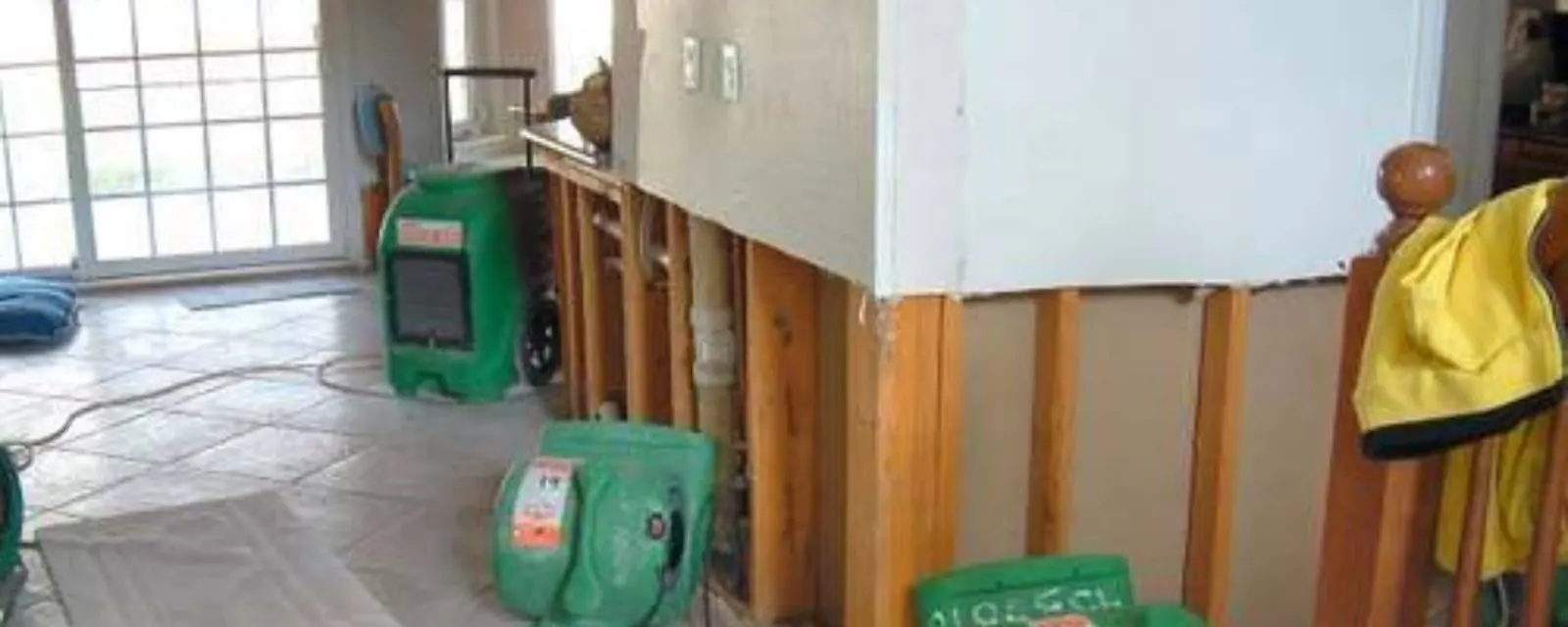
Drywall water damage: how a wall gets wet and why it spreads
Drywall is gypsum between two sheets of paper, and paper pulls water like a wick. When a pipe leaks inside a wall or water pools along a baseboard, the board draws it upward above the visible stain. The wet area is usually larger than it looks.
The wall is a cavity with framing and often insulation inside it. Water that gets into the cavity sits against the back of the board and dries slowly. Fixing the leak belongs to a plumber or roofer, while the wall question, the drying, the cleanup and the patch belong to us.
This page is about the wall decision and the patch. For the general rebuild see water damage repair, and for the early drying see water mitigation.
Signs that a wall is wet or failing
- Bubbling or peeling paint means moisture is behind the surface.
- Soft board that dents under a finger has lost its strength.
- Crumbling gypsum at the bottom edge means the core has broken down.
- Stained seams and tape that has lifted show water has moved along the joints.
- Dark, mold-like stains on the wall call for a closer look. See mold remediation before you paint.
Stains alone are not proof of active water. A meter tells us whether the wall is wet now.
Wet wall safety: the first hour
A wet wall can hide wiring, so go carefully.
- Shut off the water at the valve or main if a pipe is leaking in the wall.
- Shut off the circuit for that wall at the panel if outlets or switches got wet, and only from a dry spot.
- Keep people away from ceilings or walls that sag or bulge.
- Take photos or video of the stain and its edges.
- Let a plumber chase the leak. For the drying and the wall decision, dial (817) 623-9267.
Dry in place, cut out or replace: how the decision works
Board that is wet but firm, with clean water and a quick response, can often be dried in place. A crew pulls the baseboards, drills small holes or opens the bottom of the cavity, and moves air through it with air movers while a dehumidifier removes the moisture.
Board that is soft, crumbling, sagging or stained by contaminated water is usually cut out. The published ANSI/IICRC S500 standard is the reference for how water category affects what stays. Insulation behind wet board is checked as well and is often replaced.
A cut line is set above the wet line, so the new edge lands on dry, sound board. We read the wall before we cut.
Wet wall or bubbling paint?
Call any hour. We can talk through the wall before anyone picks up a saw.
Opening the cavity and drying before the wall is closed
Closing a wall too early is the common failure. If the cavity still reads wet, new board and paint trap the moisture, and stains and soft spots come back.
The crew uses moisture meters on the board and the framing and a thermal camera to find damp pockets. Air movers and LGR dehumidifiers run until the readings are dry. We wait for dry readings before the wall is closed. Antimicrobial treatment can be applied to surfaces that stayed wet. See structural drying for how the equipment is placed.
The patch: replacing board, taping, mudding and paint
Once the cavity is dry, new board is cut to fit the opening and fastened to the framing. Seams are taped and coated with joint compound in thin layers, sanded smooth and primed. Priming matters because new compound and old paint absorb paint differently.
Texture is next. Older walls often have a spray, knockdown or orange peel texture, and matching it takes sample patches and a practiced hand. Then the wall is painted. Sometimes the whole wall is repainted so the patch does not show where the old color has aged.
Baseboards that were pulled are reinstalled or replaced. To talk through your wall, ring (817) 623-9267.
Cost factors for drywall water damage repair
- How much board is wet and how high the water wicked.
- Whether insulation has to be replaced.
- The ceiling or wall height and how hard it is to reach.
- Texture and paint matching, and whether a full wall is repainted.
- Hidden conditions found when the wall is opened.
Insurance and wall damage
The Texas Department of Insurance advises documenting the damage and telling the agent or company early. Deadlines vary by policy. We never promise coverage, and your insurer decides. Photograph the wall before anything is cut.
Mistakes to avoid with wet walls
- Painting over a bubbled wall before it is dry.
- Cutting the wall at the visible stain edge instead of above the wet line.
- Closing the wall because the surface feels dry.
- Leaving wet insulation in the cavity.
- Cutting into walls with wiring or plumbing without checking.
North Richland Hills notes: older walls and local steps
The city history page of North Richland Hills puts the population at 45,895 in 1990 and now over 70,000. A good share of the housing is decades old, and older walls can carry layers of paint and textures that are hard to match.
The city offers an online permits portal and posts its Code of Ordinances, so you can read how it works. For anything structural, ask the city building department first. We leave permit rules to them.
With 37.01 inches of yearly precipitation in the NWS Fort Worth climate normals, exterior walls see plenty of rain. The TDI tips again stress photos before repair. Crews also work in Hurst and Keller.
Wet wall questions from NRH homes
Yes. Dial (817) 623-9267 whenever the wall worries you. Dispatch is staffed all day and night, with a same-day visit when available and no promised arrival time.
By firmness, the water source and meter readings. Firm board with clean water can often dry in place. Soft, crumbling or contaminated board is cut out.
Above the wet line, so the new edge lands on dry, sound board. The meter shows where the wet line is, which can be higher than the stain.
It should not, but texture and paint matching take care. Older walls may need the full wall repainted so the patch blends.
New board over a wet cavity traps moisture, and stains and soft spots come back. Dry readings first protect the new work.