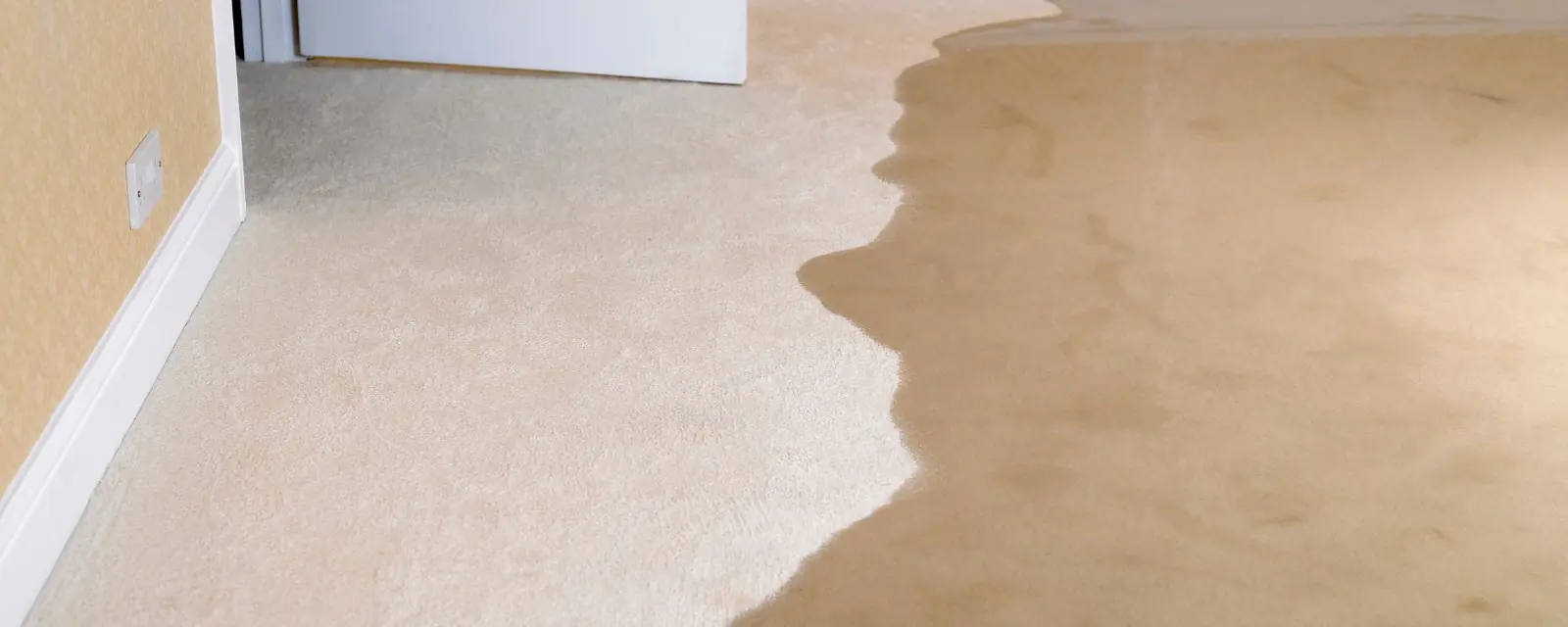
Carpet water damage: three layers, not one
Carpet is a system of three parts. The face fibers you walk on, the backing that holds them and the cushion, often called the pad, underneath. Below those sits a tack strip around the edge and a subfloor of wood or concrete.
The pad is the problem. It is built to be soft and porous, so it takes in water and holds it long after the surface feels merely damp. A damp pad stays in contact with the backing and the subfloor, which keeps moisture where drying air cannot reach it.
Whoever repairs the pipe or roof deals with the source, and our part is the wet carpet, the drying and the cleanup.
What you notice in wet carpet, and what it tells you
- Squishing underfoot means the pad is saturated.
- A musty or sour odor means the water has been there long enough to affect the pad and backing.
- Brown or yellow stains rising from the bottom suggest dirt or tannin from the pad or subfloor is wicking up.
- Color bleed along a seam or near a dyed item points to dye moving in wet fibers.
- Ripples or a loose area suggest the stretch has failed or the backing is separating.
None of these alone makes the call. They tell us where to put the meter.
Wet carpet safety: the first hour
Go slowly. Wet carpet over a live floor can hide power cords and outlets.
- Stop the water at its source. Close the valve or ask a plumber to.
- Cut power to the room at the panel if water touched outlets or cords, provided you can get to the panel without stepping in water.
- Do not walk on wet carpet more than necessary, and do not run a household vacuum on it.
- Lift furniture off the carpet. If it must stay, place foil or plastic under the feet, because aluminum and wood legs can stain wet carpet.
- Photograph the room, then call (817) 623-9267.
Can the carpet be dried in place, or does it have to be pulled?
The answer rests on the water and the time. Clean water caught quickly gives carpet the best chance, because the crew can extract it and dry the cushion and subfloor with airflow. Carpet that sat in water for a long time often loses that chance.
Water source matters too. The published ANSI/IICRC S500 standard groups water into categories by how contaminated it is. Clean supply water is the mildest group, and water from drains or outside sources is treated as more contaminated. Contaminated water usually means the pad and often the carpet are removed.
We do not state a number of days that carpet lasts. A meter reading and a look underneath settle it better than any rule of thumb.
Carpet soaked and not sure what to do?
Call any time. We can talk through the pad, the furniture and what to leave alone.
Lifting a corner and what we find underneath
Carefully releasing a corner from the tack strip lets us see the pad and subfloor. We check the underside of the carpet, the pad for saturation and the subfloor for dampness and staining. This takes a few minutes and answers the biggest question.
If the carpet is clean and the water was clean, we usually pull the pad, which is cheap to replace, and dry the carpet and subfloor with the carpet lifted. Air movers push air under it and LGR dehumidifiers take the moisture out of the room. When the readings are right, the carpet is stretched and re-laid on a new pad.
Carpet that has delaminated, smells or has contaminated water on it is removed and disposed of. See water damage cleanup for how contaminated materials are handled.
The cost of carpet water damage work
Cost follows scope, not just square footage.
- How much carpet and pad is wet.
- The water source and how contaminated it is.
- Whether the carpet can be lifted, dried and re-laid or has to be replaced.
- The subfloor type and whether it needs more drying.
- Drying days and equipment, and whether odor treatment is needed.
Ring (817) 623-9267 for a scope walk-through. Price is laid out before work begins.
Insurance, flood and wet carpet
Water from a burst pipe or appliance is a different insurance question from water that comes in from outside. Texas Department of Insurance flood tips warn that few home or renters policies pay for flood, and some do. They also say to take photos or video and keep damaged items until the adjuster has spoken with you. That includes the carpet.
We never promise coverage. Ask your insurer which events your policy covers.
Mistakes to avoid with wet carpet
- Using a household vacuum on wet carpet.
- Leaving furniture legs on wet carpet.
- Throwing carpet away before the adjuster sees it.
- Covering wet carpet with a rug or plastic.
- Running a space heater near wet carpet.
North Richland Hills notes: weather, floods and carpet
In the National Weather Service Dallas/Fort Worth normals, a typical year brings 37.01 inches of precipitation. Wet weather is part of life here, and carpet near doors and low rooms takes the first hit when it comes inside.
On its floodplain FAQ, the City of North Richland Hills reports that more than one in five National Flood Insurance Program claims comes from outside the floodplain. A carpet loss from outside water can happen in a house that is not in the mapped floodplain.
The Texas Department of Insurance flood tips say to take photos or video as soon as it is safe and keep damaged items until you speak to your adjuster. The city history page lists 8,662 residents in 1960 and 16,514 in 1970, a sign that building took off early, so some homes here have older carpet over older subfloors. We also work in Colleyville and Haltom City. For the drying process, see structural drying.
Wet carpet questions from NRH homes
Yes. The 24/7 line, (817) 623-9267, is staffed day and night, and a crew can come the same day when the schedule allows. A set arrival time is never promised.
Often, if the water was clean and it is caught quickly. The pad is usually the part removed. Contaminated water or long exposure usually means the carpet comes out too.
The pad is porous and holds water against the backing and subfloor. It dries slowly and can keep an odor going, so it is usually the first thing replaced.
It can. Carpet is usually stretched and re-laid after drying, and a stretch or re-lay corrects most ripples. Color bleed or delamination cannot be corrected.
Avoid it where you can. Walking presses water deeper and spreads staining. Do not run a household vacuum on it, because of the shock risk.