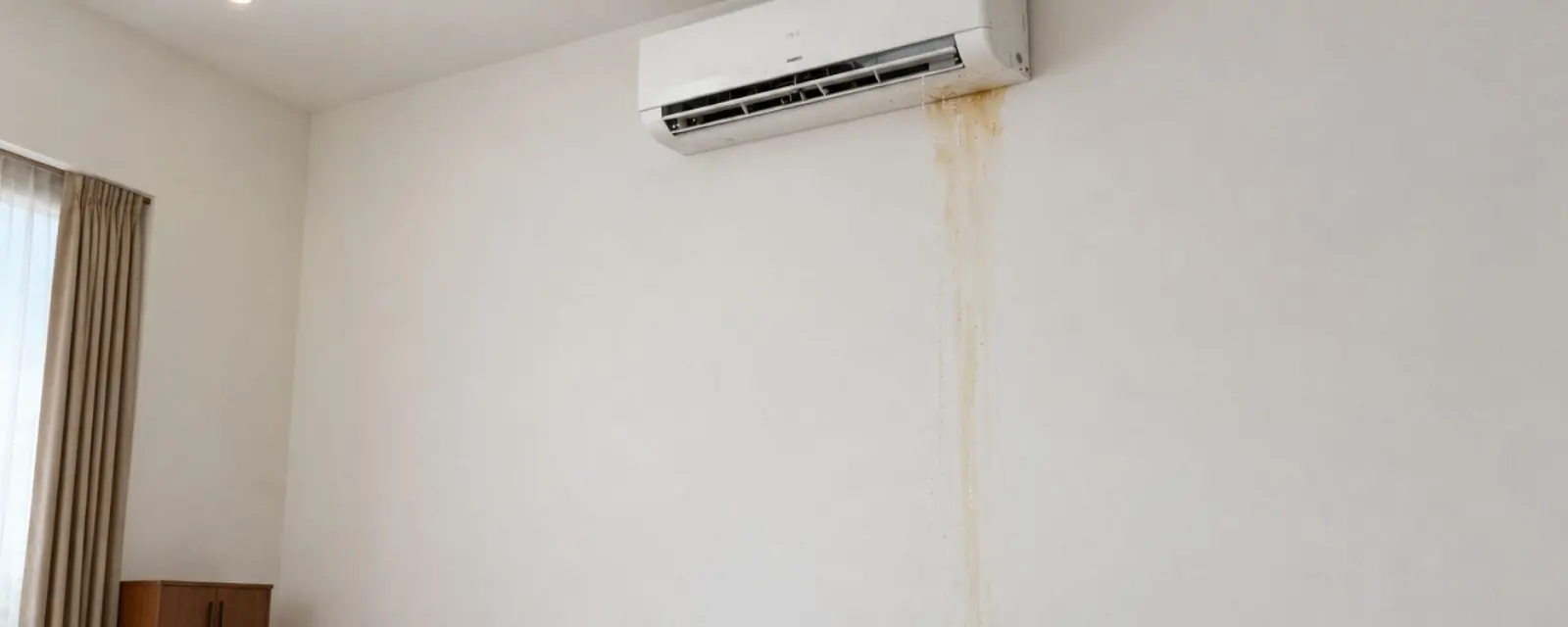
How an air conditioner ends up leaking into the house
A cooling system pulls moisture out of the air as it works, and that water has to leave through a condensate drain line. When algae and debris clog the line, the water backs up into the drain pan under the coil. When the pan fills, it spills onto whatever sits below.
Many air handlers sit in an attic or a closet, directly over finished ceilings and walls. A secondary pan under the unit is meant to catch overflow, but it can fill too. Because the water arrives a little at a time, the damage tends to build quietly in insulation and drywall.
Signs that the water is coming from the AC and not the roof
A ceiling stain below an attic unit is the classic sign. The better clue is timing. A stain that grows only while the system is running points at the condensate line, because the unit produces water only when it cools. A stain that grows after a rainstorm and holds still on dry days points up at the roof, and our roof leak water damage page covers that path.
- A brown ring that spreads on hot afternoons and stalls overnight.
- Water in the secondary pan or a wet closet floor around the air handler.
- A musty smell near a return vent or the closet door.
- Damp baseboard or carpet under a wall that holds the unit.
If you cannot tell, shut the system off for a day and watch the stain. A technician can confirm the source.
Safety in the first hour of an AC leak
Water near an air handler means water near electrical parts. Take these steps before you do anything else.
- Set the thermostat to off, then switch off the breaker that feeds the air handler.
- Keep people out from under any ceiling that sags, bulges or drips steadily.
- Place a bucket under drips and move furniture and rugs out of the wet zone.
- Do not climb into a wet attic. Insulation hides wiring and weak spots in the floor.
- Book an HVAC technician for the drain line, then phone (817) 623-9267 about the wet ceiling.
Stain growing under your AC?
Call the 24/7 line. The drying plan is laid out up front.
What we do while the technician fixes the unit
An HVAC technician clears the drain line, checks the pan and restores the unit. We do not repair air conditioners. Our work starts where the water went.
A moisture meter and a thermal camera show how far the water traveled through the ceiling, wall cavities and attic floor. Wet insulation holds water like a sponge, so it is usually bagged and removed. Sagging or stained drywall is cut back to dry board. From there, air movers and LGR dehumidifiers pull moisture out of the framing and the ceiling that stays.
Where the water sat for a long stretch, we apply antimicrobial treatment to the exposed framing. If you see dark growth, our mold remediation page explains that separate job. Judging which wet materials stay follows the published ANSI/IICRC S500 standard.
North Richland Hills notes: a long cooling season and older houses
NWS Dallas/Fort Worth normals for 1991-2020 show an average of 20 days per year at or above 100 degrees, an annual mean temperature of 66.6 F and 37.01 inches of precipitation. Long hot stretches mean air conditioners run hard, and a drain line that clogs in a busy season can overflow before anyone notices.
NRH grew from 30,592 residents in 1980 to 45,895 in 1990, according to the city history page, so plenty of attics and closets have housed air handlers for decades. Before any HVAC or structural work, ask the city building department what applies. The city runs an online permits portal for permits and inspections.
Texas Department of Insurance material draws a line between a continuous water leak, which it names as an exclusion, and a sudden and accidental release of water, which most policies cover. That matters for a slow drain line leak.
What affects the cost of an AC leak cleanup
- Time the drain line spent leaking before discovery.
- How much insulation is wet, and how hard the attic is to reach.
- Whether ceiling drywall can dry in place or has to be cut out.
- The number of rooms below the unit that took on moisture.
- Equipment days needed until the framing reads dry.
Scope and price get explained up front. To hear your own figures, dial (817) 623-9267.
Insurance and a slow drain line leak
The TDI guide treats a sudden and accidental water release and a continuous leak as two different things. A drain line that overflows one afternoon and a line that dripped for months can be treated differently. Your insurer decides, so read your policy and ask before you assume.
Take photos of the pan, the stain and the wet insulation before anything is removed. Keep the technician invoice that describes the clog. That record helps the adjuster see what happened and when.
Mistakes to avoid after an AC leak
- Painting over the stain before the ceiling reads dry.
- Running the system again before the drain line is cleared.
- Pushing on a bulging ceiling to see how bad it is.
- Skipping the attic insulation because the room looks fine.
To prevent a repeat, ask your HVAC company about the drain line and pan during routine service.
Where this page fits
Once the area is dry, the rebuild belongs to water damage repair. We serve North Richland Hills and nearby towns such as Hurst and Keller with the same process.
AC leak questions from local homeowners
Our phone line runs around the clock and a crew can often come the same day. No arrival time is promised. On the call, the dispatcher talks you through the thermostat and breaker.
Watch when the stain grows. If it spreads only while the system runs, suspect the condensate line. If it grows after rain, suspect the roof. A technician or roofer can confirm.
An HVAC technician does. We dry and clean what the water reached, and we do not repair air conditioners.
Usually not. Saturated insulation holds water against the ceiling below, so it is typically removed and replaced after the area is dry.
No. Turn the system off and start drying the same day when possible. Moisture keeps working into drywall and framing while you wait.